Some muscle tightness doesn’t respond to the usual fixes. You stretch, and it comes back. You roll it out, and it shifts a few inches over. Percussion therapy works on a layer of muscle that most other approaches can’t reliably reach, which is why it’s become one of the treatments we offer at Integrated Health.
What Is Percussion Therapy?
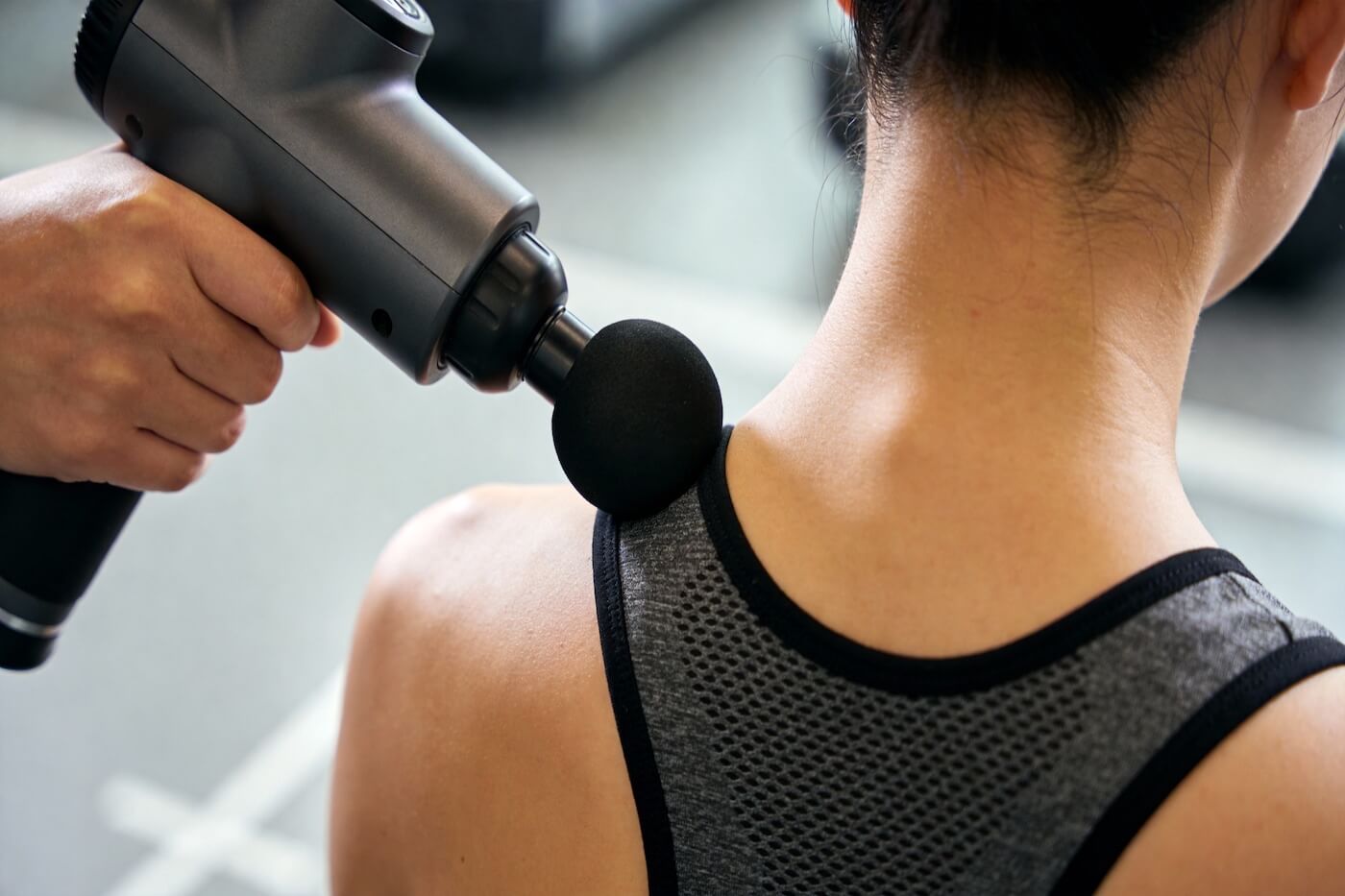
Percussion therapy is a powerful form of massage that uses rapid, repetitive tapping to reach tight muscles and soft tissues. It’s delivered by a specialized handheld tool, often called a massage gun, that pulses at a much higher speed and intensity than traditional massage techniques can.
How Does It Work?
The tool itself is a handheld device with a motor that drives an attachment head up and down very rapidly – usually somewhere between 1,750 and 2,400 pulses per minute, depending on the model and setting. When pressed against a muscle, it delivers fast, repetitive pulses of pressure into the tissue.
That rapid pulsing does a few things at once:
- Increases blood flow. Repeated pressure increases circulation to the area, delivering more oxygen and nutrients to the muscle, flushing out metabolic waste that builds up with tension or exertion.
- Reaches deeper tissue. Hands and standard massage tools primarily work on the surface and middle layers of the muscle. The speed of percussion allows the pressure to travel deeper into fibers that are otherwise hard to access without significant manual force.
- Disrupts knots and adhesions. When muscle fibers get stuck together or form tight bands (what people often call “knots”), the rapid tapping helps break up that tension and allow the fibers to glide normally again.
- Calms the nervous system’s tension response. Muscles often stay tight because the nervous system is telling them to. The rhythmic input from percussion can interrupt that signal, allowing the muscle to release.
- Stimulates the proprioceptors. Your muscles have sensors in communication with the brain. Activating these sensors can improve coordination, range of motion, and the muscle’s readiness for movement. Using different attachment heads for different muscle groups delivers different stimulation levels. A broad, round head suits larger areas, such as the thighs or back. A smaller, pointed head can target a specific knot or trigger point.
What It Can Help With
People often come in for percussion therapy when they’re dealing with persistent tightness that’s interfering with how they move or feel. It can loosen muscles that have been holding stress for weeks or months. It supports the body’s recovery after physical exertion. And it often improves the range of motion in stiff or sore joints. Many clients also notice they sleep better and feel less general fatigue after a session.
Curious If It’s Right for You?
Percussion therapy works very well for some people and isn’t the best fit for others. It depends on what’s going on in your body and what you’ve already tried.
The best way to find out is to talk with us. Schedule an appointment to experience percussion therapy in a clinical setting, or book a free 15-minute consultation to ask questions and see whether it’s the right next step for you.
Disclaimer: Content is for educational purposes, not a substitute for professional diagnosis or treatment; consult a physician for health concerns.